 By Ann Anderson Berry, MD, PhD and Brianna Brei, MD on behalf of Ruby’s entire care team
The neonatal and perinatal medical faculty at the University of Nebraska Medical Center, representing both Nebraska Medicine and Children’s Nebraska, were contacted by Omaha’s Henry Doorly Zoo & Aquarium in 2025 to help plan for the pregnancy and delivery care of Ruby, a resident Orangutan. This highly anticipated first pregnancy later in life, prompted concern. While the pregnancy didn’t end as we had hoped, we learned a great deal about teamwork and our connection to zoo animals during the months that we were invited to observe Ruby’s journey.
As obstetricians and neonatologists, our work focuses on the safe delivery of newborns and ensuring healthy outcomes for both mother and infant. In meeting the team of veterinarians and professional caretakers responsible for Ruby, we encountered professionals who shared those same goals. Our teams met in person and virtually throughout the year, and we learned more about orangutans, while the zoo’s veterinarians and keepers learned more about high-risk pregnancy, delivery, and neonatal care. It was a great opportunity to collaborate to best support Ruby’s pregnancy. We saw firsthand the incredible resources the zoo provides for its animals, including a brand-new state-of-the-art hospital. Learning from other deliveries across the country, we believed our expertise in human obstetric and neonatal care could be valuable in supporting this primate pregnancy.
A natural birth was considered the most likely outcome, but we were prepared to perform a Cesarean section delivery if Ruby became ill or if labor stalled (typically labor is four hours long). We were also prepared to provide neonatal resuscitation at a C/S, ensuring that Ruby and her baby would have the best care available at the zoo for a surgical delivery. Through the resources of our two hospitals, all necessary equipment was available for Ruby’s delivery window (a wide window given the nature of mating opportunity and pregnancy testing). Sharing our expertise in advanced delivery care with a zoo that has an exceptional primate care program was a seamless process. The level of preparation we bring to a preterm human delivery was nearly identical to preparations for Ruby’s delivery. Each visit to the zoo, each team call, and every email were filled with ideas aimed at strengthening delivery plans, better understanding the delivery date, and caring for Ruby as her pregnancy progressed.
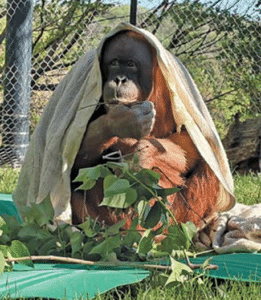
In early 2026, as we entered the anticipated birth window, the obstetric and neonatology teams eagerly signed up for the “Ruby” call, each hoping for a delivery during our shift. Days, weeks, and then more than a month passed without a baby, and anticipation shifted to feelings of discomfort. How long had she been pregnant? She was older…how was her health? The huge differences in the information we typically have for monitoring mother and fetus vs. Ruby were now clear. We quickly learned humility and recognized that Ruby, as a powerful and wild animal, ultimately determined the limits of her care. Ultrasound examinations were performed through Ruby’s voluntary participation while working with her primary zookeeper for over a decade on medical behavior training. Ruby determined the frequency and duration of the ultrasounds performed and occasionally took a quick taste of the ultrasound probe gel, with a few moments when the probe was nearly lost to her powerful grip. Toward the end of her pregnancy, it became apparent that she was less interested in participation in ultrasounds.
With limited diagnostic information and not knowing her date of conception, we were anxious that the pregnancy was going too long. Should we induce or deliver surgically? The veterinary team reached out to the Orangutan Species Survival Plan team to consult with veterinarians and animal care professionals across the globe. The team received the recommendation to delay intervention as long as Ruby showed no signs of distress, and within days, Ruby went into labor. After a few short hours, she delivered a very small stillborn infant. Ruby appeared concerned, and it seemed like she understood the unfortunate outcome. Our teams were heartbroken as we watched a mother mourning her stillborn infant. Then, 38 minutes later, to our surprise, Ruby delivered a second, well-grown, but also stillborn infant. The shock among veterinarians and animal care teams was palpable, as twin orangutans are extremely rare.
Ruby, her zoo team and her medical team all grieved the loss of her infants. We often second-guess our care after an unexpected outcome; certainly, in this case, we asked ourselves many questions. However, a surgical delivery carried significant risks for Ruby, failure to bond for the baby(ies), and a multitude of other unknowns.
This profound experience taught us a great deal, and we were honored to be part of the team that cared for and watched over Ruby.